Modern football has evolved into a game defined by speed, efficiency, and transitional moments rather than prolonged spells of possession. The Champions League Round of 16 first leg between Real Madrid and Manchester City offers a clear example of how decisive vertical transitions can be at the highest level. By reacting instantly after regaining the ball and attacking before the opponent could reorganize, Real Madrid highlighted how crucial timing and precision have become.
In today’s game, it is no longer just about long periods of possession, instead it thrives on dynamic transition moments. The vertical transition is at the center of this approach, with the clear objective of moving the ball forward as quickly as possible. This must happen before the opponent can reorganize defensively, in order to deliberately exploit their instability during these moments. As the opponent is often still focused on their own attack, their defensive structure is frequently unbalanced immediately after losing possession.
The focus in the transition from defense to attack lies on quick decision-making and direct, vertical passing. To reach the final third with as few passes as possible, open spaces must be used consistently. Runs in behind the defensive line play an important supporting role in this process. In particular, players positioned between the opponent’s midfield and defense become the first outlet, as they operate precisely within the unstable zones of the opposing defensive structure. Wide players and forwards can further stretch the defense with diagonal runs, thereby opening passing lanes forward. In this way, defensive recoveries are transformed into dangerous attacks within seconds, making the speed of decision-making often more decisive than long spells of possession.
Real Madrid made use of this approach particularly in the Champions League Round of 16 first leg against Manchester City, demonstrating impressively that a team can be efficient and win convincingly even with less possession. The team led by Álvaro Arbeloa created significantly more dangerous situations than their English opponents by immediately looking to play forward after regaining possession in midfield and advancing into the final third before City could reorganize.
Real Madrid operated in a 4-4-2 system that combined offensive flexibility with defensive compactness. The versatile midfielders were able to switch quickly between defense and attack, providing crucial support in both phases of play. Brahim Díaz repeatedly occupied spaces between the lines, while Vinícius Júnior consistently attacked the open spaces in behind. Federico Valverde, arguably the most influential player of the match, excelled both defensively and offensively by repeatedly making dynamic runs from deep and creating dangerous situations in front of goal. Every ball recovery by Madrid immediately turned into a counterattack, while the team coached by Pep Guardiola repeatedly lost its defensive structure.
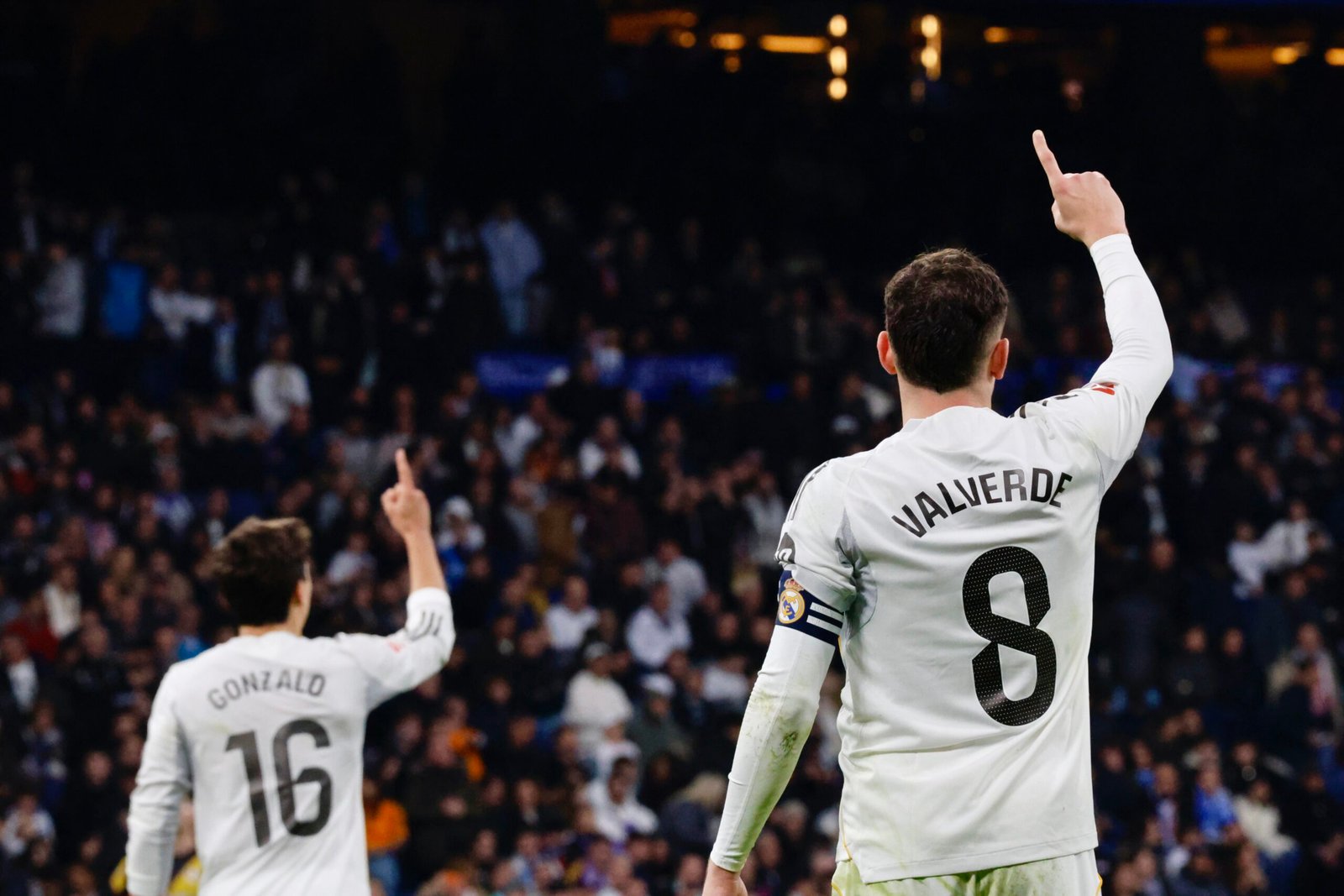
The opening goal by Valverde also clearly illustrated how a simple yet quickly executed counterattack can dismantle an entire team. The captain received a long pass from goalkeeper Thibaut Courtois, who instantly recognized the open space behind the defense from distance. Valverde made a run into this space, controlled the ball, and rounded goalkeeper Gianluigi Donnarumma before calmly finishing into the empty net to give his team the lead after 20 minutes. This moment highlighted how quickly Real Madrid identified and exploited defensive weaknesses. The two additional goals further emphasized how effectively Madrid capitalized on the opponent’s passivity and structural issues. For the third goal, it was again Courtois who reacted quickly and ensured the ball reached Vinícius, who advanced down the left side and made full use of the open spaces in the defense. In addition, despite several notable absences, the team managed to consistently apply its strengths and exploit Manchester City’s possession-based style, high defensive line, and intense pressing.
Madrid’s success was primarily based on quick counterattacks that consistently punished the slow retreat of the opponent’s defensive line. At the same time, Los Blancos controlled the defensive phase with compact lines and constant mutual support. As a result, Real Madrid secured a deserved 3:0 victory against Manchester City and put themselves in an excellent position for the second leg.