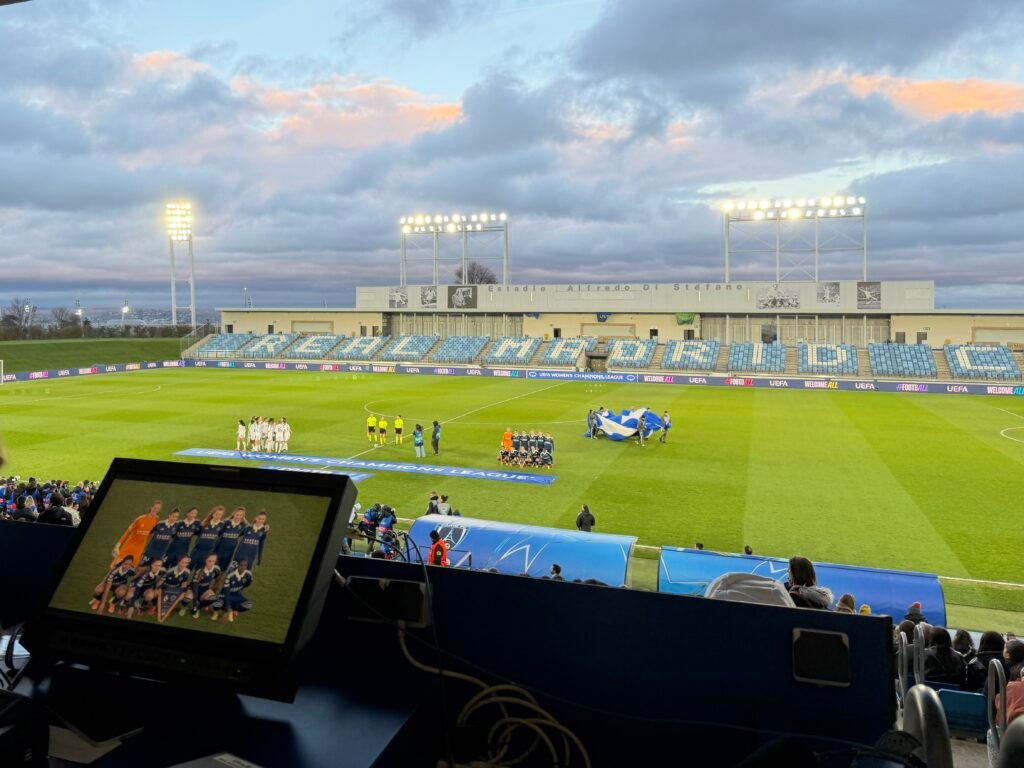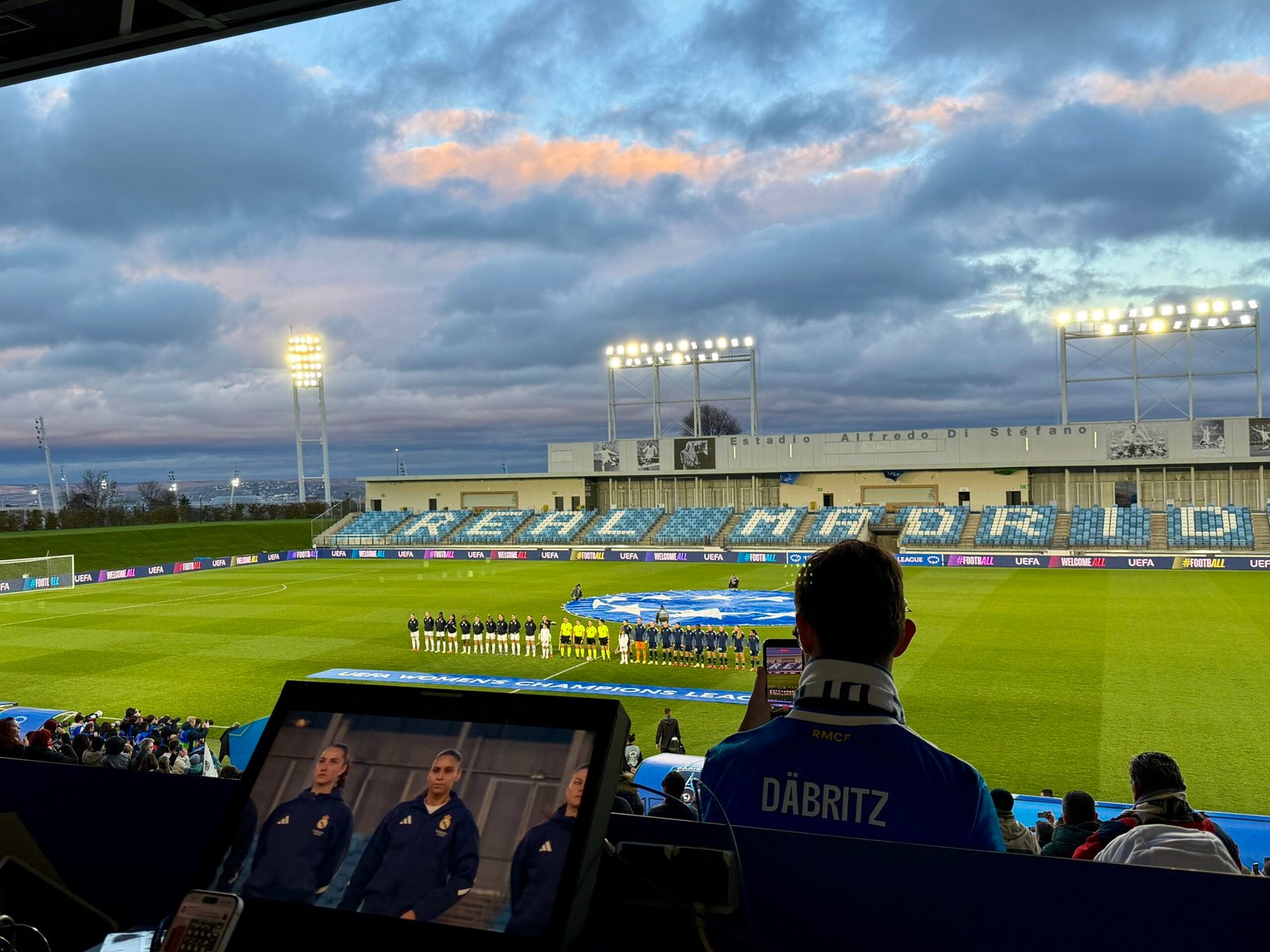
On Wednesday, 18 February 2026, I had the opportunity to attend a match for the first time as part of my internship at Real Madrid Femenino. In the second leg of the Women’s Champions League playoffs against Paris FC, Real Madrid deservedly won 2:0.
When I entered the stadium two hours before kick-off, there was already a lot going on. The backstage area was full of people from Real Madrid, Paris FC and UEFA. Although kick-off wasn’t until 18:45, for many people behind the scenes, the game had already started hours before.
I was led into an office behind the players’ tunnel, where I found my colleagues from the communications department. Among other things, we had to confirm and publish the line-ups and approve social media posts. In the media gallery, we had to check that all media representatives were in their assigned seats and studios. But I quickly realised that a press officer was not only responsible for media relations. Especially in women’s football, where the departments are not yet as specialised as in men’s football, a press officer has to take on a number of organisational tasks and lend a hand wherever necessary to ensure that a match runs smoothly.
Just in time for kick-off, I was allowed to take a seat in an unused radio booth to follow the action. The game started with a bang: after five minutes, Paris defender Théa Greboval was shown a red card for a harsh foul on striker Naomie Feller, who was attempting to run solo towards Mylène Chavas’ goal. With a numerical advantage, Real Madrid had several chances to take the lead but struggled to score the decisive goal. But the visitors were not ready to pack their bags just yet. Although they were down to ten players on the pitch, Paris were able to repeatedly advance towards the opponent’s goal. The home side came closer and closer to scoring the 1:0, but even when Caroline Weir was awarded a penalty after a handball by Océane Picard in the penalty area, she failed to convert.
The half-time break came with no goals scored. What serves as a breather for the players is fifteen minutes in which the staff behind the scenes have to get back to work. So it was my job to collect unused accreditations and take them to the office.
Real Madrid started the second half as the clearly dominant team. In the 54th minute, Las Blancas were finally rewarded for their efforts: Feller took a cross from Eva Navarro with a superb volley and sank the ball into Chavas’ goal. Just thirteen minutes later, Eva Navarro managed to cross the ball into the penalty area again. This time, however, it rebounded off Parisian Melween N’Dongala and ended up in her own goal. Despite further chances, the score remained 2:0 to Real Madrid, who clearly defeated Paris with an aggregate score of 5:2 and advanced to the quarter-finals of the Women’s Champions League. Clásico rivals Barcelona await them there.
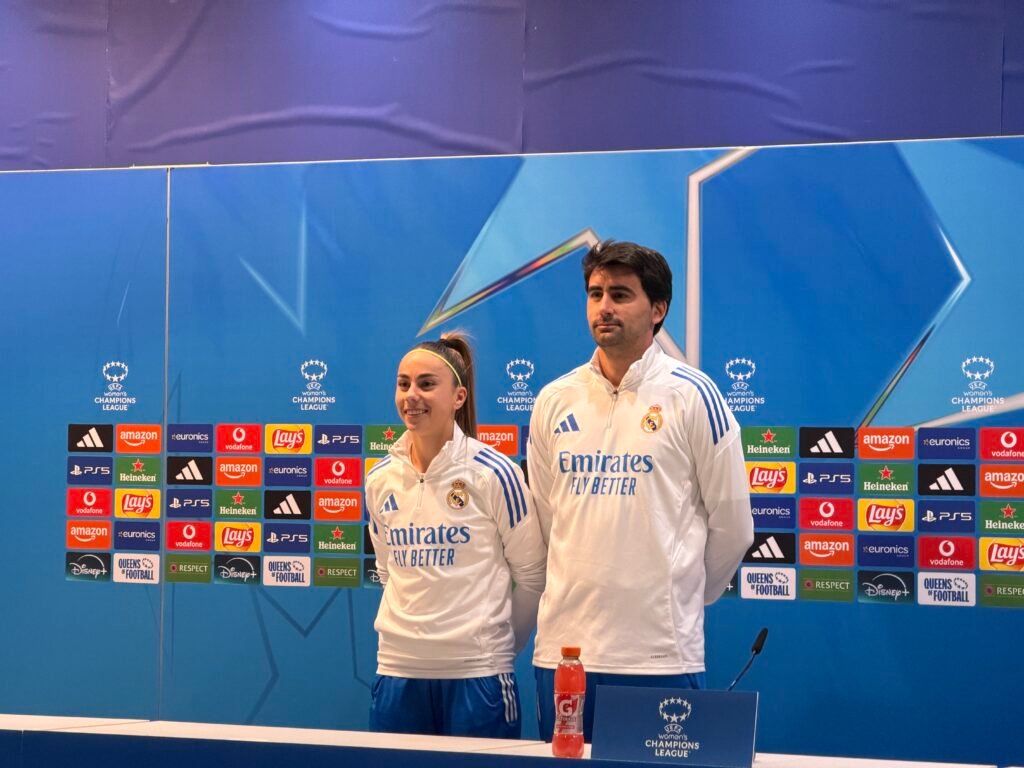
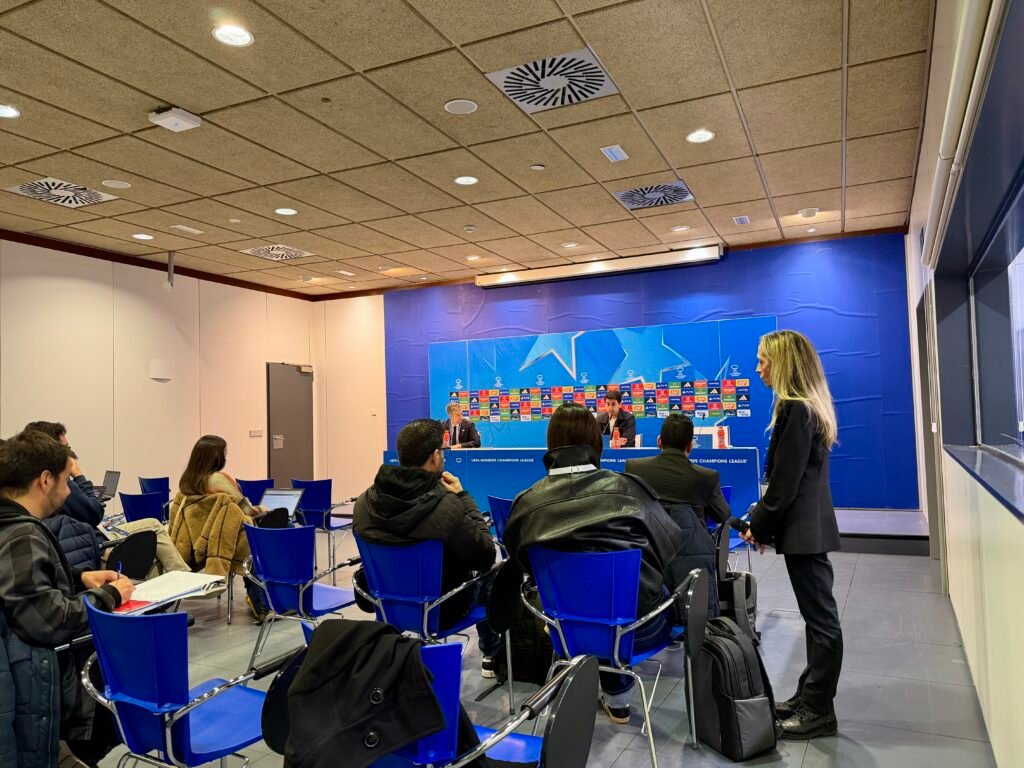
Everyone involved was delighted with the clear victory. But there was no time to celebrate yet. First, the photographers’ covers had to be collected. In addition, flash interviews and a press conference were on the agenda. Although I didn’t have any tasks to perform this time, it was incredibly exciting to watch how the media part of the game unfolds after the actual match. Real Madrid coach Pau Quesada, Athenea and Eva Navarro, who was named player of the match after her two assists, stood in front of the microphone. At first glance, the media zone seemed hectic, but on closer inspection it quickly became clear that everyone present had a specific task and knew what they had to do.
Although women’s football is less developed than men’s football, this match showed that the structures are nevertheless incredibly professional. Like the men, the women are given the opportunity to showcase themselves in the media. These developments are incredibly important in order to promote women’s football, make it more popular and ultimately give it the stage it deserves.