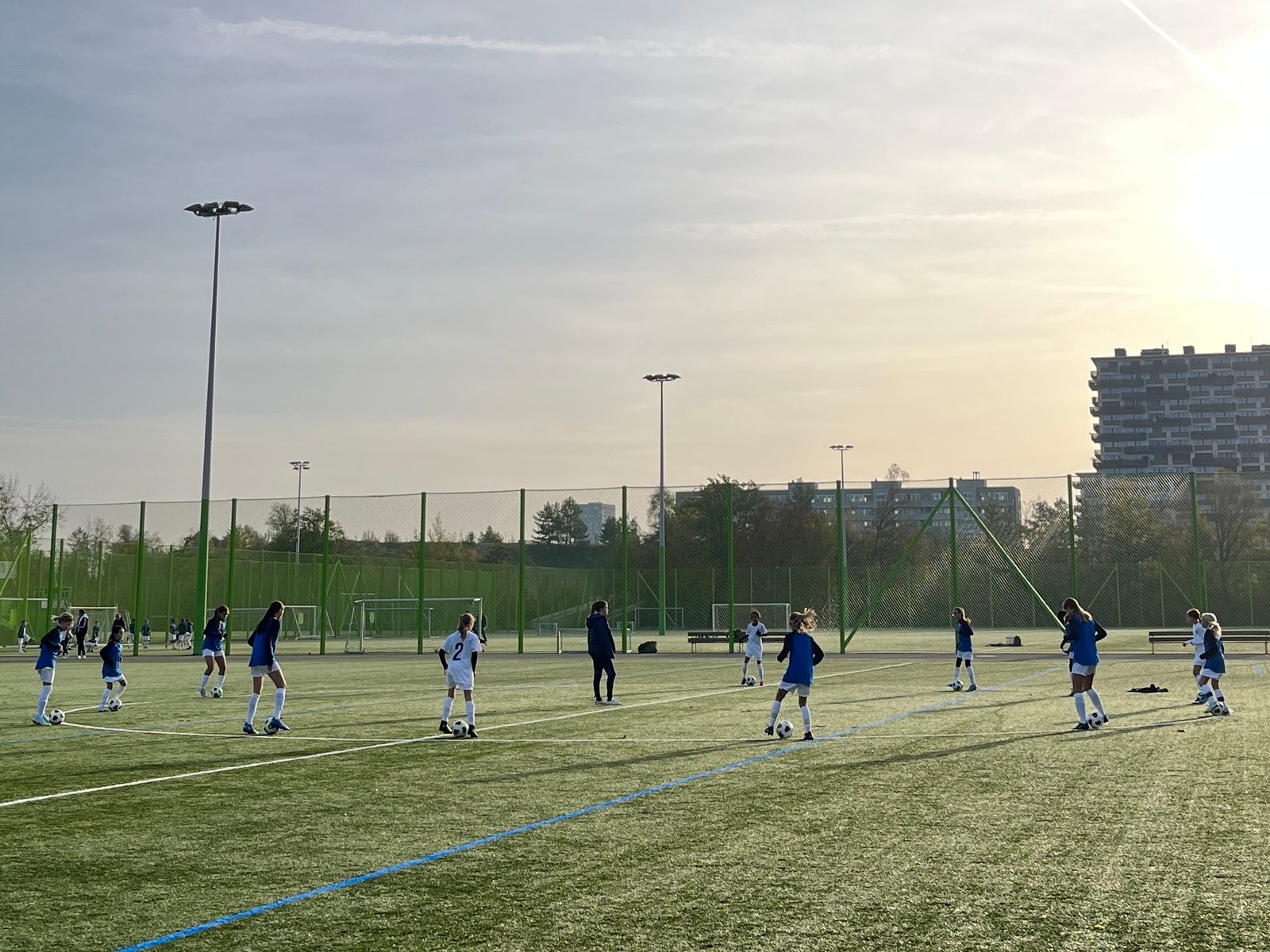
FIFA has adopted a regulation stating that at its women’s tournaments, at least one woman must be part of the coaching staff, either as head coach or assistant coach. In addition, at least two women must be part of the official support team on the bench, and one member of the medical staff must be female. These provisions apply to all youth and senior tournaments as well as national team and club competitions organized by FIFA.
The quota requirements will be implemented for the first time in senior football at the upcoming FIFA World Cup 2027 in Brazil. However, the debut will take place at the youth level, where the rules will already apply at the FIFA U-20 World Cup in September 2026 in Poland.
FIFA justifies the new regulations by stating that, despite the rapid growth of women’s football in recent years, the majority of teams are still coached by men. At the 2023 World Cup in Australia and New Zealand, only twelve of the 32 head coaches were women. “There are simply not enough women in coaching today. We must do more to accelerate change by creating clearer pathways, expanding opportunities, and increasing the visibility for women on our sidelines,” FIFA Football Director Jill Ellis emphasizes, highlighting the urgency of increasing women’s presence, particularly in technical roles. FIFA President Gianni Infantino calls the newly introduced regulations “the absolute minimum.”
FIFA aims to pursue its long-term strategy by combining structural progress with investment in education and career development to prepare women specifically for leadership roles in football. Ellis underlines this: “The new FIFA regulations, combined with targeted development programmes, mark an important investment in both the current and future generation of female coaches.”
Women in leadership positions in football remain rare. They are particularly underrepresented on the sidelines. Sarina Wiegman has established herself as one of the most successful coaches in women’s football: the Dutch coach led England’s national team not only to victory in the UEFA Women’s EURO 2022 and 2025 but also reached the final of the 2023 FIFA Women’s World Cup, where England only fell short in the final. She has been named Best FIFA Women’s Coach multiple times and is considered one of the most influential figures in international women’s football. Her career shows how important women in technical leadership roles can be. Nevertheless, Wiegman was the only female coach among the last eight remaining teams at the 2023 FIFA Women’s World Cup.
Emma Hayes, current head coach of the United States women’s national team, told Sky Sports how limited the number of women represented in football is. This applies not only to coaching but to the entire sport. Sky Sports reports that in 2025, only around nine percent of professional football coaches were women. According to Hayes, this can be disheartening, especially for aspiring female coaches or football-loving girls and women in general. “I do think it’s important for girls and women to have more female role models. So, it’s not just about the coaching piece, it is the role model piece and being guided,” said the former Chelsea coach. She criticizes that approaches are often simply copied from men’s football without being adapted to the specific needs of women. This includes flexible work models such as job-sharing or online courses, as well as targeted mentoring to enable a balance between career and family. She calls for a deliberately designed system that actively supports women and removes barriers. When her son was born in 2018, she received excellent support at Chelsea, but this was by no means a given. Would she have left coaching if the club had not accommodated her in this way? “Yeah, 100 per cent. I think I was very fortunate to get the support I did. But I was the privileged one,” Hayes recalls.
Ultimately, for the 49-year-old, the main focus is on how to ensure that women who have found their love for the sport are not lost again: “ I think that whether a youth club, amateur club, pro club, how intentional are you being at not only bringing women into the coaching space, but keeping them there and thinking at it through their lens, not through a male one.”
Women remain massively underrepresented in coaching, and quotas can help overcome structural barriers, place women in leadership positions, and give them visibility. Supporters see this as an important step to create role models and open opportunities for women, while critics fear that competence may take a back seat to gender or that changes may not be lasting. This raises the question of how effective FIFA’s quota for women will be in the long term.
Opening doors in a male-dominated field is a step in the right direction. However, it is crucial that women are not only represented but also supported and taken seriously. As Hayes emphasizes, it cannot simply be a copy-paste of male structures. The framework must be deliberately tailored to the needs of women.